



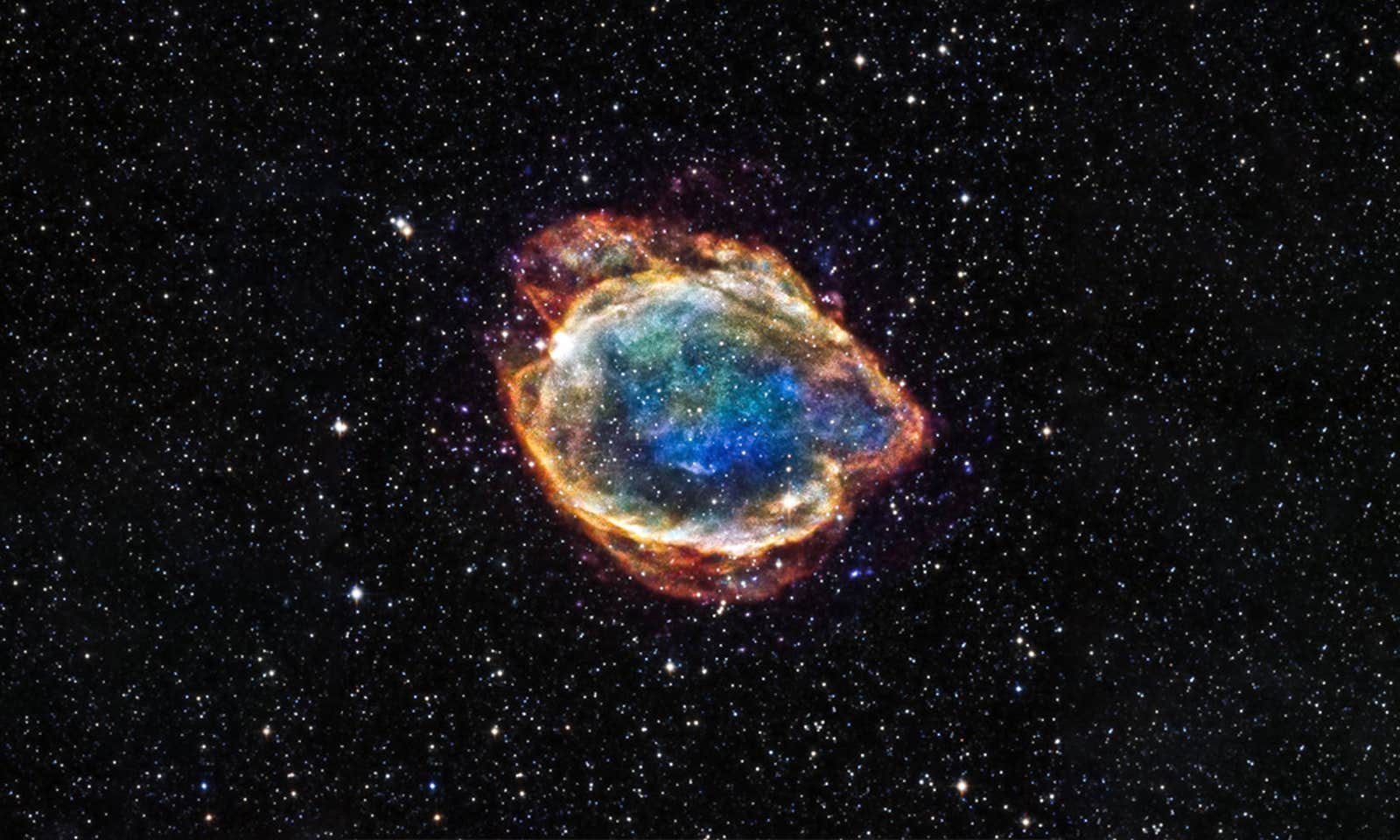
TLDR: The universe's expansion is accelerating, a discovery made in the late 1990s through supernova observations. This led to the concept of dark energy, which makes up about 68% of the universe and poses significant questions about cosmic evolution and the future.
The understanding of our universe has undergone significant transformations, particularly with the discovery of its accelerating expansion. This groundbreaking revelation stemmed from observations made in the late 1990s, which challenged the conventional wisdom of a gradually slowing universe. Astronomers utilized supernova observations to measure the distances of far-off galaxies, leading to the unexpected conclusion that the universe was not only expanding, but doing so at an increasing rate.
The key to this discovery was the identification of Type Ia supernovae as standard candles, allowing scientists to calculate cosmic distances accurately. These stellar explosions occur at a consistent brightness, providing a reliable method for measuring how quickly galaxies are receding from us. The findings from two independent teams, the Supernova Cosmology Project and the High-Z Supernova Search Team, converged on the same result: the universe's expansion is accelerating.
This astonishing outcome led to the hypothesis of an enigmatic force dubbed "dark energy." While the exact nature of dark energy remains one of the major unsolved mysteries in astrophysics, it is theorized to constitute about 68% of the universe. This has profound implications for our understanding of the cosmos, suggesting that the fate of the universe could lead to scenarios such as the "Big Freeze," where galaxies drift apart indefinitely as the universe continues to expand.
In addition to altering our comprehension of cosmic evolution, the acceleration of the universe's expansion has sparked a wealth of research and debate within the scientific community. Physicists are now tasked with unraveling the properties of dark energy and determining its role in shaping the future of the cosmos. The journey toward this understanding has propelled forward advancements in observational techniques and theoretical models, ensuring that the quest to understand our universe remains an exciting frontier in science.
As we continue to explore the depths of cosmic expansion, the implications of this knowledge extend beyond mere curiosity, influencing areas such as cosmology, fundamental physics, and even the philosophy of existence itself. The quest to decipher the accelerating universe represents not just a chapter in our scientific narrative, but a profound exploration of reality itself.
Please consider supporting this site, it would mean a lot to us!
