



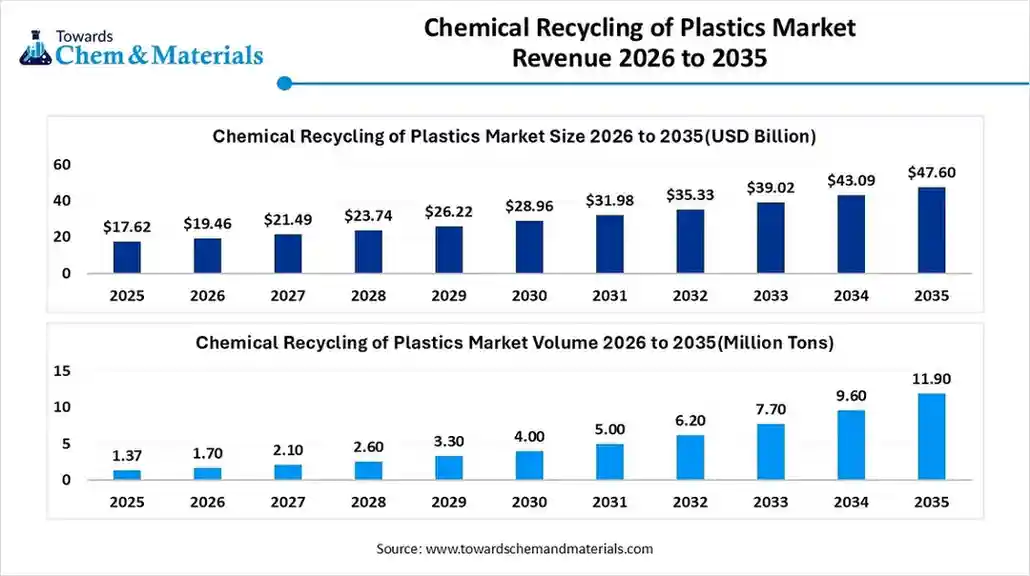
TLDR: Chemical recycling of plastics is projected to grow to 11.90 million tons by 2035, driven by increased demand for sustainable practices and stricter regulations. While advancements in technology and partnerships are promising, challenges like infrastructure development must be addressed to unlock the full potential of this market.
The chemical recycling of plastics is set to experience substantial growth in the coming years, with market volume projected to reach an impressive 11.90 million tons by 2035. This significant increase highlights the rising demand for sustainable waste management solutions as industries strive to minimize their environmental impact.
As global awareness of plastic waste issues intensifies, the need for advanced recycling technologies has never been more critical. Chemical recycling offers a promising alternative to traditional mechanical recycling methods, converting plastic waste back into its original monomers or other valuable chemicals. This process not only enhances the recyclability of various plastics but also allows for the production of high-quality materials that can be reused in manufacturing.
Key drivers of the recycling industry include increasing regulations aimed at reducing plastic waste, coupled with growing consumer expectations for sustainable practices from brands. Governments worldwide are implementing stricter policies to encourage recycling and reduce landfill contributions, further propelling the market for chemical recycling technologies.
Furthermore, notable advancements in chemical recycling processes are paving the way for more efficient and cost-effective operations. The integration of innovative technologies and partnerships among key stakeholders in the industry is essential for scaling these solutions. As companies recognize the economic potential of converting waste into valuable resources, investment in chemical recycling is expected to surge.
However, challenges remain, such as the need for significant infrastructure development and the establishment of a robust supply chain to support the collection and processing of plastic waste. Overcoming these hurdles will be integral to realizing the full potential of the chemical recycling market.
In conclusion, the future of chemical recycling for plastics looks promising, with expectations of reaching 11.90 million tons by 2035. As stakeholders work collaboratively to address the challenges and enhance the efficiency of recycling processes, the industry is likely to play a pivotal role in fostering a more sustainable and circular economy.
Please consider supporting this site, it would mean a lot to us!
