



TLDR: Jupiter will be highly visible in January, shining brightly in the constellation Pisces. As it approaches opposition, it will appear larger and brighter, offering an excellent opportunity for stargazers to observe its features and moons. This event highlights Jupiter's role in our solar system.
The night sky is about to showcase one of its most magnificent celestial bodies, Jupiter. Known for its immense size and stunning features, this gas giant will be particularly prominent in the coming weeks, making it impossible to overlook. As we enter January, Jupiter will shine brightly, serving as a beacon for stargazers and astronomy enthusiasts alike.
Jupiter, the largest planet in our solar system, is well-known for its distinct bands of clouds and the iconic Great Red Spot, a massive storm that has raged for centuries. As the months progress, its visibility will increase, making it a perfect subject for observation. Those with telescopes will have the opportunity to see its four largest moons, known as the Galilean moons—Io, Europa, Ganymede, and Callisto—which are often visible even with small telescopes or binoculars.
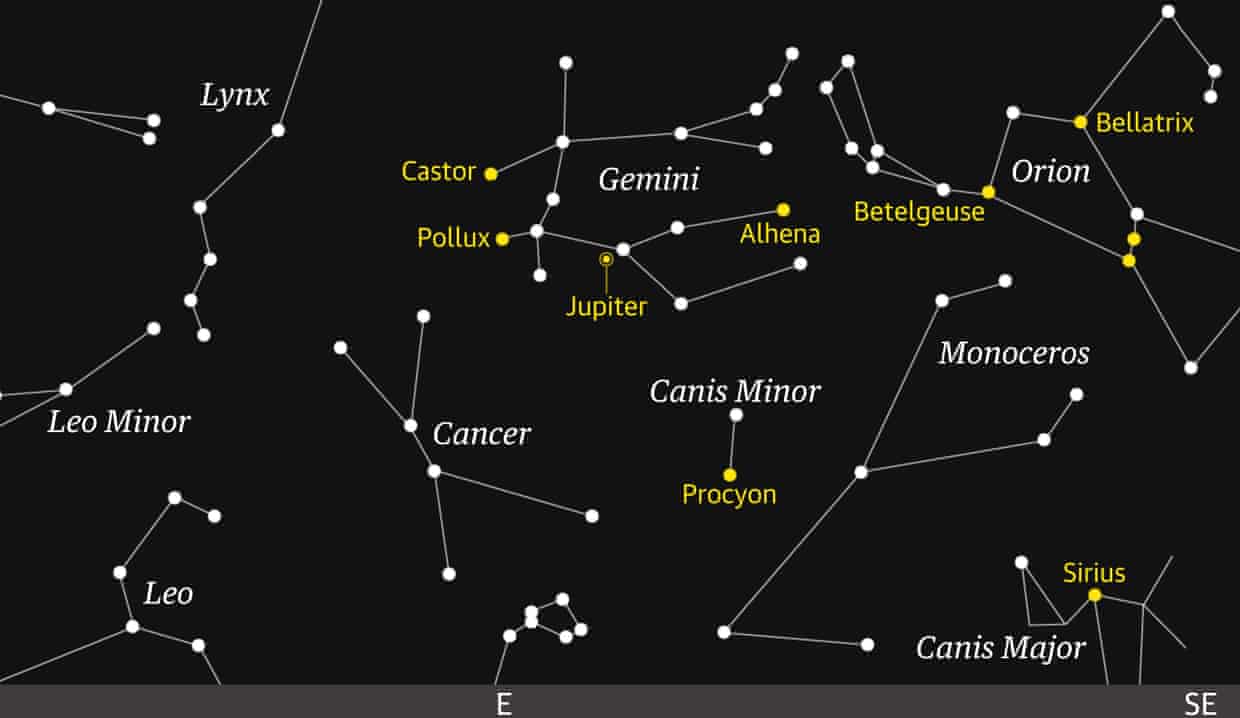
For observers looking to catch a glimpse of Jupiter, it will be located in the constellation of Pisces. Its brightness makes it one of the most prominent objects in the night sky, easily outshining nearby stars. This month presents an excellent opportunity for both seasoned astronomers and newcomers to engage with the wonders of our solar system.
As Jupiter approaches its opposition later this month, it will be at its closest point to Earth, providing an unparalleled view. This event occurs when the Earth is directly between the Sun and Jupiter, allowing for optimal visibility. During this time, the planet will appear larger and brighter than usual, making it an exciting event for anyone interested in astronomy.
In addition to its beauty and size, Jupiter plays a crucial role in our solar system. Its immense gravitational pull helps to protect Earth from potential asteroid impacts, making it an essential part of our cosmic neighborhood. As we prepare to witness this spectacular event, it's a reminder of the vastness and complexity of our universe.
So grab your telescope or simply look up at the night sky, as Jupiter will be an awe-inspiring sight this January. It’s an excellent chance to connect with the cosmos and appreciate the beauty of our solar system's largest planet.
Please consider supporting this site, it would mean a lot to us!
