



TLDR: Recent advancements suggest that gravitational waves may help decode dark matter, a mysterious component of the universe. By analyzing these waves, scientists aim to uncover dark matter's properties, shifting the approach from particle physics to a cosmic perspective and fostering collaboration across scientific disciplines.
Recent advancements in astrophysics have unveiled a fascinating potential for gravitational waves to serve as a tool for decoding the enigmatic nature of dark matter. Dark matter, which constitutes a significant portion of the universe's total mass, has remained elusive due to its non-interactive nature with electromagnetic forces. However, the exploration of gravitational waves opens new pathways for understanding this mysterious component of the cosmos.
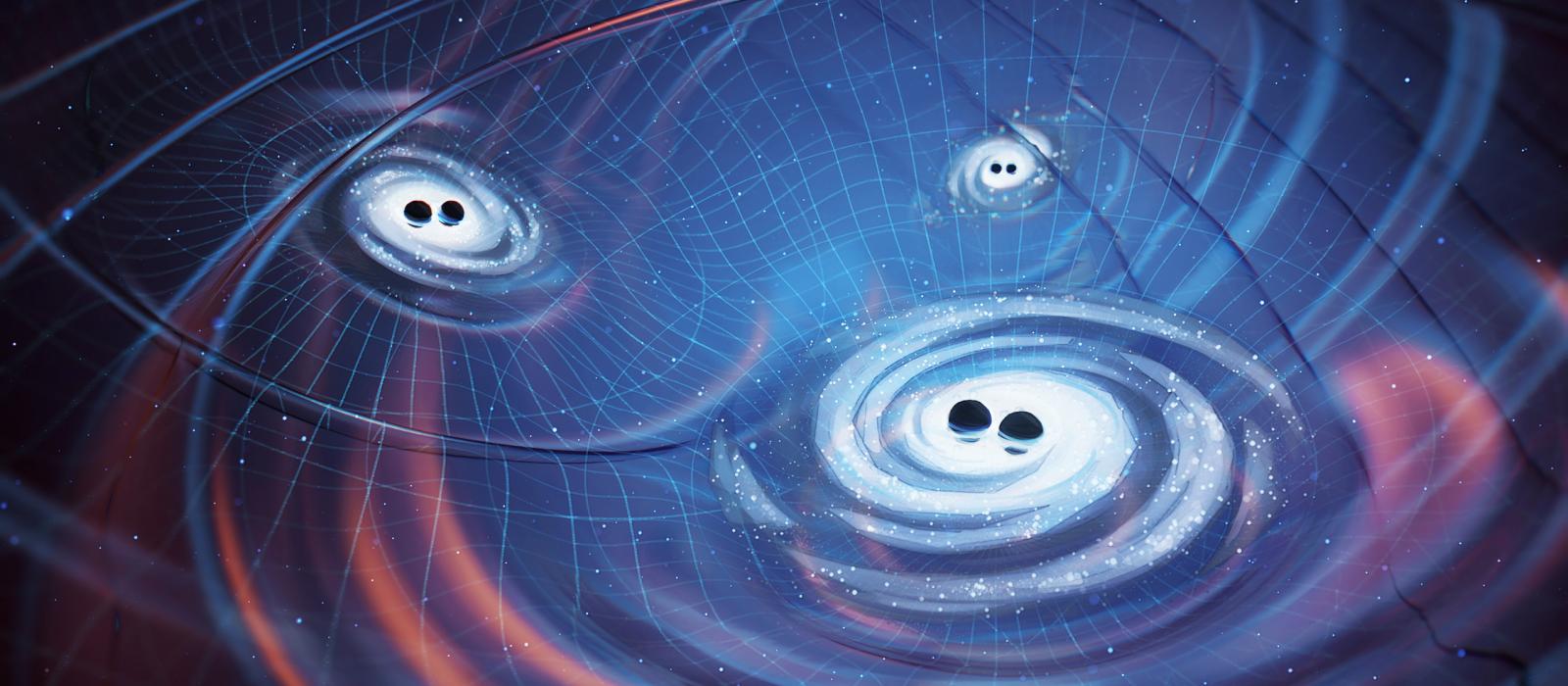
Gravitational waves, ripples in spacetime caused by astronomical events such as the collision of black holes or neutron stars, carry essential information about their origins. Researchers propose that by analyzing these waves, we can glean insights into the distribution and behavior of dark matter. This approach marks a significant shift in how scientists can investigate dark matter, moving from traditional particle physics to a more cosmic perspective.
The study emphasizes the potential of using gravitational wave detectors to identify signals that may indicate the presence of dark matter. By correlating the data collected from these detectors with models of gravitational interactions, scientists aim to uncover patterns that could reveal the properties of dark matter. This method not only enhances our understanding of gravitational physics but also integrates it with cosmological phenomena.
Furthermore, the research highlights the collaboration between gravitational wave astronomy and other fields, such as particle physics and cosmology. As different scientific disciplines converge, they create a comprehensive framework that could lead to breakthroughs in understanding the fundamental composition of the universe.
While the road ahead is complex, the implications of such discoveries are profound. If successful, this research could redefine our comprehension of the universe, bridging gaps in our knowledge about dark matter. As we continue to explore the cosmos, the potential of dark matter and its interactions through gravitational waves could illuminate aspects of the universe that have long remained in shadow.
In conclusion, the intersection of gravitational wave research and dark matter investigation offers an exciting frontier in astrophysics. As scientists delve deeper into these cosmic mysteries, they are not only expanding our understanding of the universe but also paving the way for future discoveries that could change our perception of reality itself.
Please consider supporting this site, it would mean a lot to us!
