



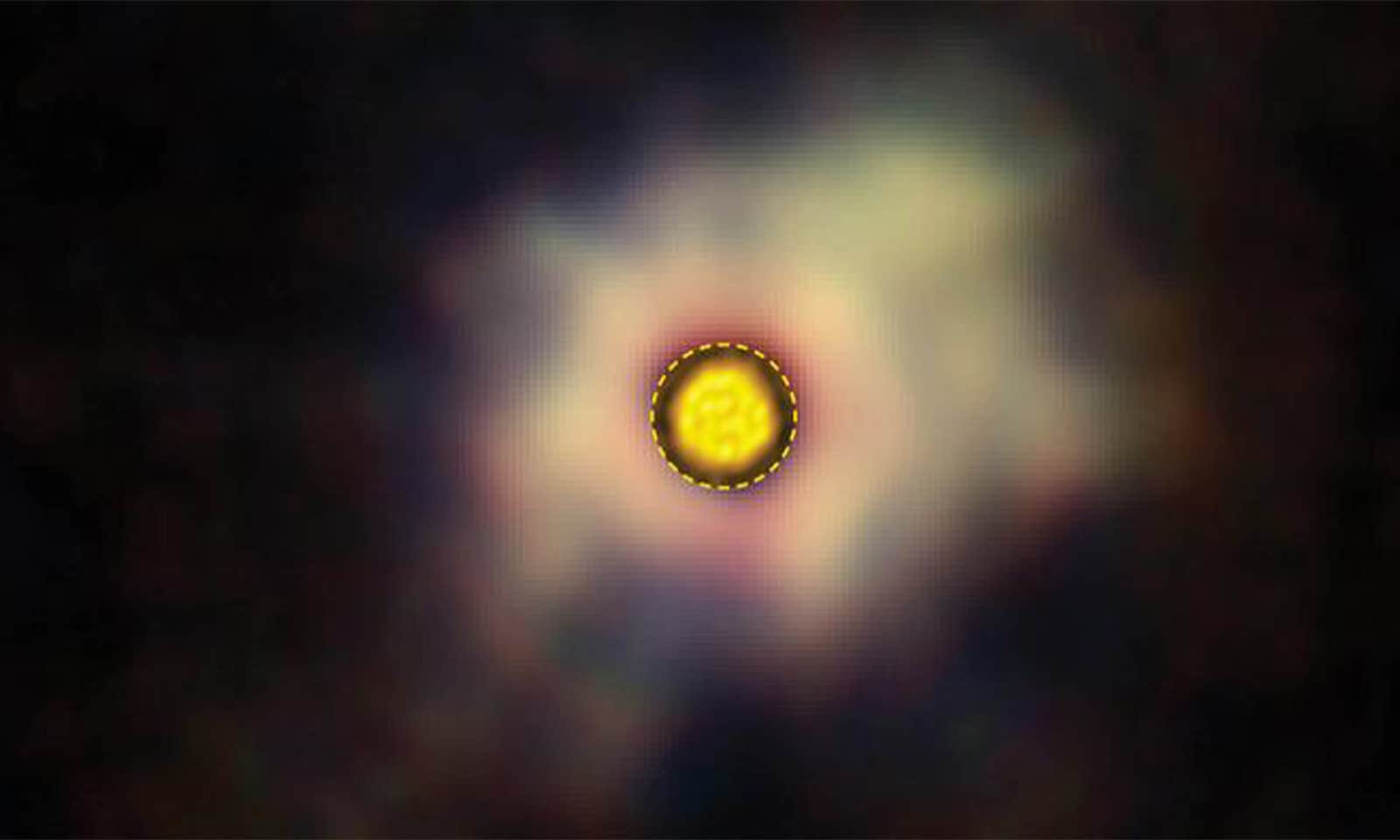
TLDR: Recent research challenges the belief that stardust disperses uniformly across galaxies, revealing it behaves chaotically and can clump together due to cosmic forces. This uneven distribution impacts star formation and the availability of essential elements for planet creation, reshaping our understanding of galactic evolution.
Recent research has upended long-held beliefs about how stardust disperses throughout the cosmos. Traditionally, scientists believed that stardust, the remnants of stars that have exploded in supernovae, spread uniformly across galaxies, facilitating the creation of new stars and planets. However, new findings suggest that this process is far more complex than previously thought.
The study, which draws on advanced observational techniques, reveals that stardust is not merely scattered evenly but instead behaves in a more chaotic manner. This research indicates that stardust can clump together, influenced by various cosmic forces such as gravity and turbulence within the interstellar medium. These clumps can then serve as fertile grounds for star formation, leading to localized bursts of stellar activity.
Moreover, the research highlights the significance of supernovae in the lifecycle of stardust. When stars explode, they eject vast amounts of material into space, but this material does not simply disperse evenly. Instead, the explosion's energy can propel certain elements farther away, while others might get trapped in nearby regions. This uneven distribution challenges our understanding of how elements necessary for planet formation, such as carbon and oxygen, are spread across galaxies.
These insights have profound implications for our understanding of the universe and the evolution of galaxies. The findings suggest that the environments in which stars form may be more variable than previously thought, leading to a richer tapestry of galactic development. Scientists are now keen to explore how this new understanding of stardust distribution might influence theories surrounding planet formation and the chemical makeup of future stars.
As researchers continue to delve into the complexities of stardust and its role in cosmic evolution, it becomes clear that the universe is even more intricate than we had imagined. This ongoing exploration underscores the importance of innovation in observational technology and theoretical models, ultimately enriching our comprehension of the cosmos.
Please consider supporting this site, it would mean a lot to us!
