



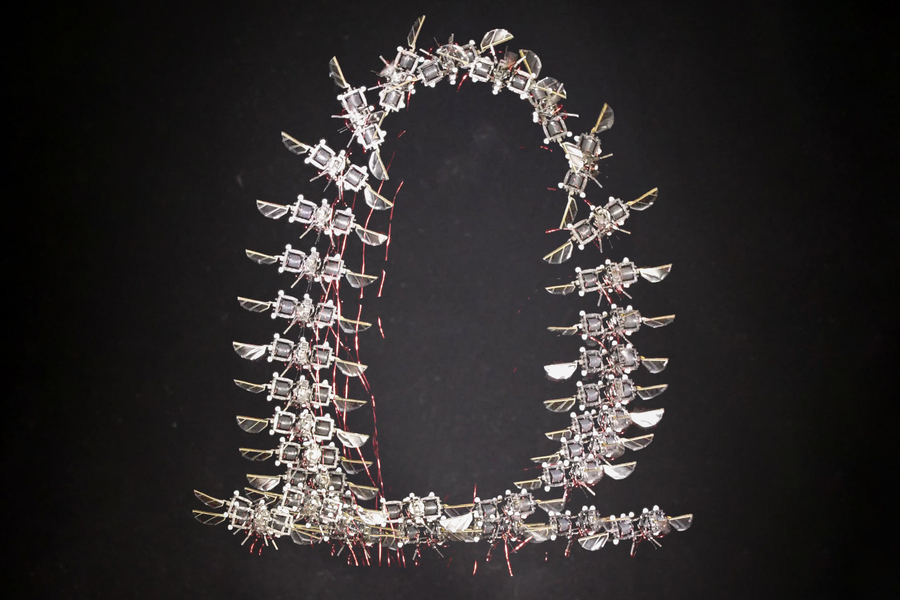
TLDR: MIT engineers have developed a small aerial microrobot that mimics a bumblebee's flight, enabling it to navigate complex environments swiftly. This innovation holds potential for applications in environmental monitoring, search and rescue, and agriculture, and may inspire further advancements in robotics and AI integration.
Engineers from the Massachusetts Institute of Technology have made significant advancements in robotics with the development of an innovative aerial microrobot. This cutting-edge device can soar at speeds comparable to that of a bumblebee, showcasing remarkable engineering prowess and opening new avenues in the field of microrobotics.
The microrobot, which measures merely a few centimeters in size, is designed to navigate complex environments with agility and speed. Its capabilities can potentially lead to breakthroughs in various applications, such as environmental monitoring, search and rescue operations, and even pollination processes, which are critical for agriculture.
One of the standout features of this microrobot is its unique wing design, which mimics the flapping motion of a bumblebee. This design not only allows for rapid acceleration but also enables the robot to hover and maneuver effortlessly in tight spaces. By utilizing advanced algorithms and lightweight materials, the engineers have ensured that the microrobot achieves high efficiency while maintaining durability.
With the ability to fly as fast as a bumblebee, this microrobot represents a significant leap forward in aerial robotics. Its development may inspire further research and innovation in the field, paving the way for more sophisticated technologies that can function in challenging environments. As the interest in drone technology continues to grow, such advancements could revolutionize how we interact with the world around us.
Furthermore, the implications of this technology extend beyond just flying capabilities. The integration of artificial intelligence into these microrobots could enhance their decision-making processes, allowing them to adapt to various situations autonomously. This could be particularly useful in emergency scenarios where swift and precise action is paramount.
In conclusion, the development of this aerial microrobot marks a pivotal moment in the evolution of robotics. Its ability to fly at bumblebee-like speeds, combined with its advanced design, positions it as a versatile tool for future applications. As research continues to progress, one can only imagine the innovative solutions that will emerge from the intersection of robotics and nature-inspired engineering.
Please consider supporting this site, it would mean a lot to us!
