



TLDR: Recent studies reveal that supermassive black holes often avoid consuming large amounts of matter due to complex interactions between gravity, energy, and their environments. Factors like energy output, accretion disk temperature, and black hole spin influence this behavior, affecting both black hole growth and galaxy evolution.
Recent studies in astrophysics have shed light on the puzzling behavior of supermassive black holes and their tendency to avoid consuming large amounts of matter, even when the opportunity arises. These colossal entities, which reside at the centers of most galaxies, can possess masses equivalent to millions or even billions of suns. Yet, they often exhibit a surprising restraint when it comes to accreting nearby gas and stars.
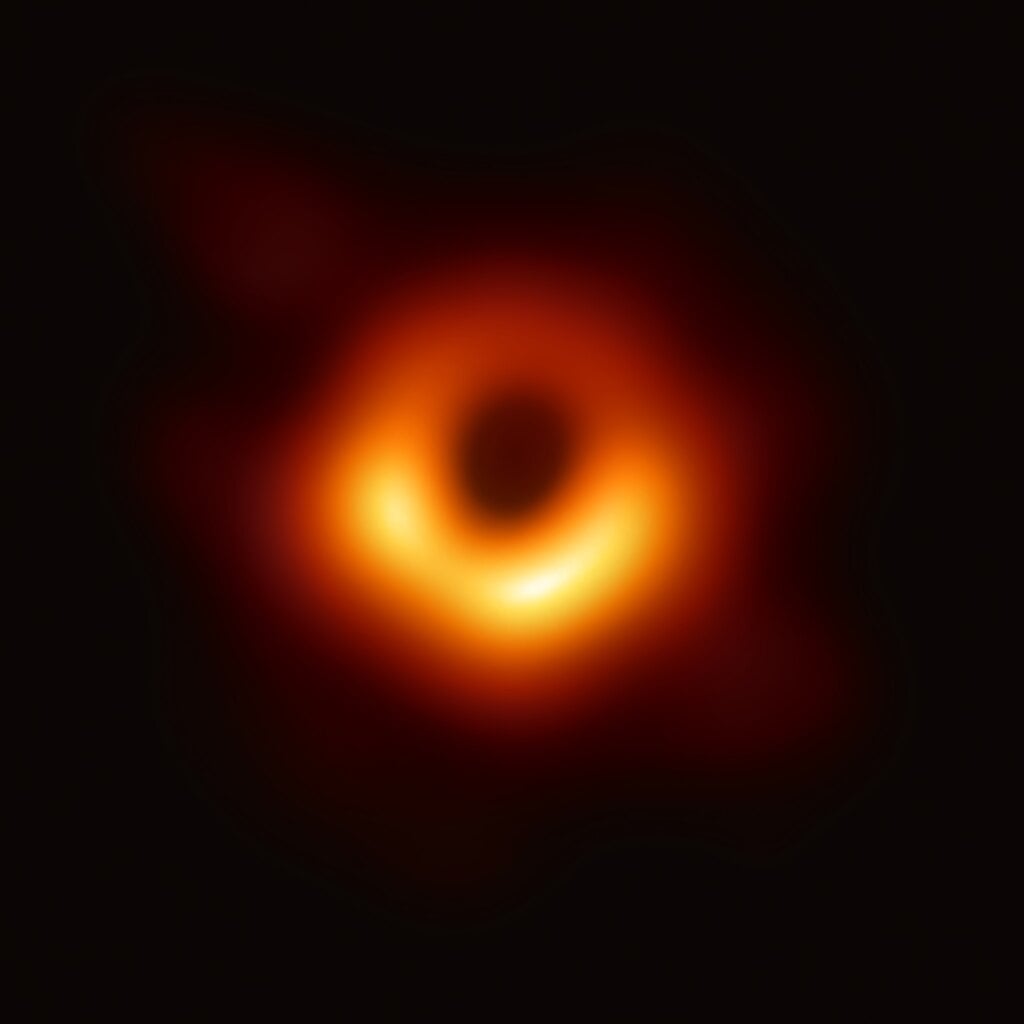
The phenomena surrounding supermassive black holes reveal a complex interplay between gravity, energy, and the surrounding environment. When matter gets too close to a black hole, it forms an accretion disk, a swirling mass of gas that heats up and emits intense radiation before eventually being absorbed. However, researchers have found that in certain situations, these black holes seem to regulate their intake of matter, almost as if they are on a diet.
One of the main factors influencing this behavior is the immense energy output from the black hole itself. As matter falls into the accretion disk, it generates significant energy, which can create powerful outflows of radiation and particles. This process can effectively blow away surrounding material, preventing it from being consumed by the black hole. The feedback mechanism is crucial; it not only affects the growth of the black hole but also impacts the evolution of the host galaxy.
Another critical aspect is the temperature of the accretion disk. At high temperatures, the radiation pressure increases, which can counteract the gravitational pull of the black hole. This balance between gravitational attraction and radiation pressure leads to a scenario where the black hole is less likely to "feast" on available material.
Additionally, the black hole's spin plays a significant role in determining how much matter it can effectively consume. A rapidly spinning black hole may have different dynamics compared to a slower one, influencing its ability to attract and retain material in its vicinity.
These insights into the behavior of supermassive black holes not only contribute to our understanding of these enigmatic cosmic giants but also have broader implications for galaxy formation and evolution. By comprehending how black holes interact with their surroundings, astronomers can piece together the intricate puzzle of the universe's structure and development.
In conclusion, the mechanisms behind why supermassive black holes seem to turn down feasts are complex and multifaceted, involving gravitational forces, energy dynamics, and interactions with their environments. As research continues, we can expect to learn even more about these fascinating objects that lie at the heart of our galaxies.
Please consider supporting this site, it would mean a lot to us!
