



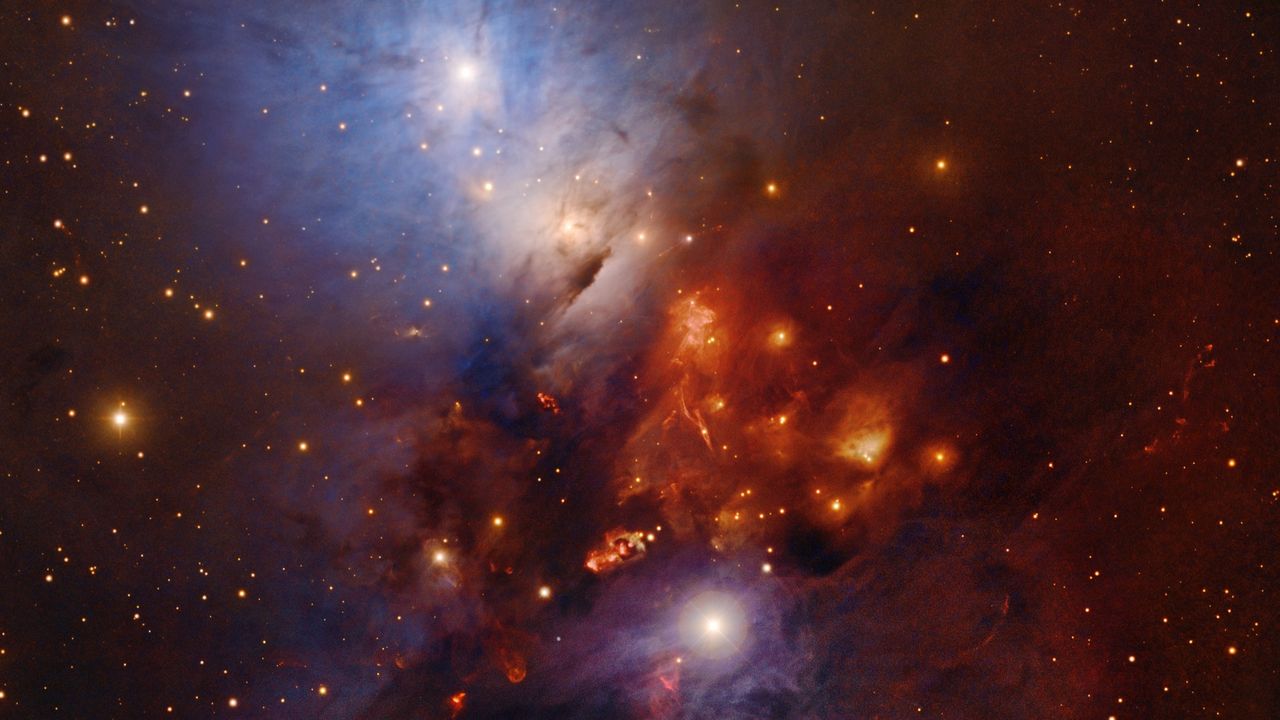
TLDR: Astronomers recently discovered 400 rings in the reflection nebula NGC 2261, located 2,500 light-years away. This finding enhances our understanding of star formation and stellar development, providing insights into cosmic phenomena and the life cycles of stars, while showcasing the beauty of the universe.
Recent observations have unveiled a mesmerizing sight in the cosmos, showcasing a dazzling array of 400 rings within a reflection nebula. This stunning discovery not only captivates the imagination but also sheds light on a long-standing mystery surrounding star formation that has puzzled astronomers for nearly three decades. The nebula, known as NGC 2261, is located approximately 2,500 light-years away from Earth in the constellation of Monoceros.
The rings are formed from dust and gas that are illuminated by the light of a nearby star, creating a spectacular visual effect. Each ring represents different layers of material that have been organized and shaped by the gravitational forces of the star, offering valuable insights into the processes of star formation and the dynamic interactions within the nebula. This phenomenon had been observed previously, but the sheer number of rings found in this recent study is unprecedented.
One of the most intriguing aspects of this discovery is its potential to explain the mechanisms of stellar development over time. The rings provide a clearer understanding of how stars form from surrounding materials, and how these materials can interact to create complex structures. This knowledge is crucial for a deeper comprehension of the life cycle of stars and the evolution of galaxies.
Moreover, the research team employed advanced imaging techniques to capture the clarity of the rings, which enhances our understanding of the physical properties of the nebula. The findings have sparked excitement within the scientific community, as they may pave the way for future studies aimed at unraveling the complexities of cosmic phenomena.
This remarkable observation not only highlights the beauty of the universe but also emphasizes the importance of ongoing research in astronomy. As scientists continue to explore the depths of space, each discovery brings us one step closer to understanding the fundamental processes that govern our universe.
Please consider supporting this site, it would mean a lot to us!
