



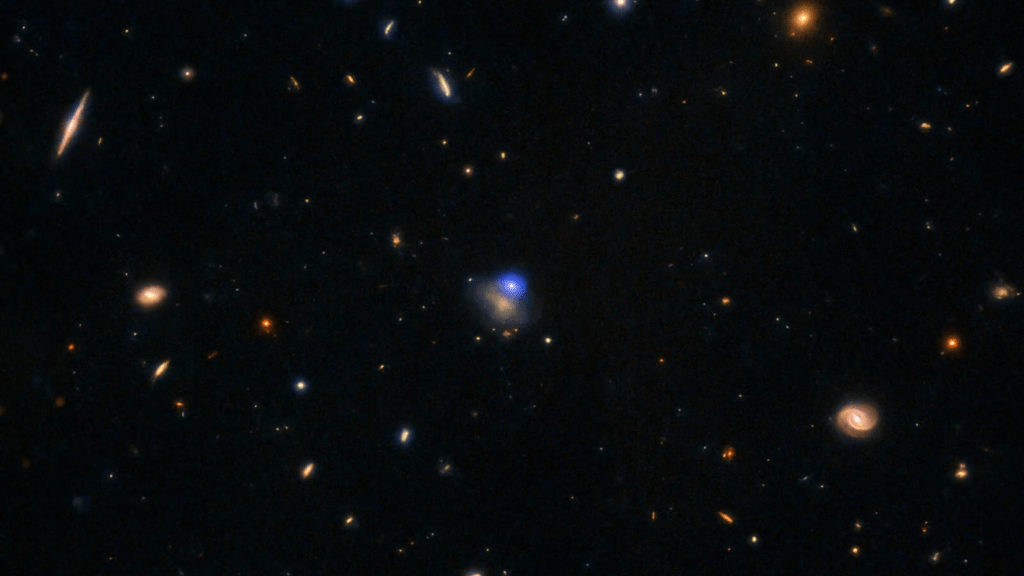
TLDR: Recent observations have detected mysterious blue flashes in the night sky, sparking theories about their origins. Possible explanations include cosmic events like supernovae, interactions between cosmic rays and the Earth's atmosphere, and neutron star emissions. Understanding these phenomena could enhance our knowledge of cosmic processes.
Recent astronomical observations have revealed mysterious blue flashes in the night sky, leaving scientists puzzled and intrigued. These bursts of light, often described as blinding, have been observed across various locations, sparking numerous theories about their origins and implications.
Researchers have been investigating these phenomena to understand what causes them. One leading hypothesis is that the flashes are linked to a specific type of cosmic event, potentially related to supernovae or other explosive stellar occurrences. The intense energy released during these events could produce the striking blue light that observers have reported.
Another possible explanation involves interactions between cosmic rays and the Earth's atmosphere. As high-energy particles collide with atmospheric molecules, they may create a cascade effect, resulting in these vivid blue flashes. This theory highlights the dynamic relationship between space and our planet's atmospheric conditions.
Additionally, scientists are exploring the role of neutron stars in generating these flashes. These incredibly dense remnants of supernovae have been known to emit bursts of radiation, and their behavior could be a key factor in the blue flash phenomenon. As researchers delve deeper into this area, they hope to uncover more about the characteristics and behavior of neutron stars, and how they might contribute to such spectacular displays.
The implications of these discoveries extend beyond mere curiosity. Understanding the origins and mechanics of the blue flashes could enhance our knowledge of cosmic events and the fundamental processes that govern the universe. By studying these occurrences, scientists aim to refine our models of stellar life cycles and the interactions between different astronomical entities.
As telescopes and observational technology advance, astronomers will likely continue to encounter similar mysteries. The quest to decode the secrets behind these blinding blue flashes not only captivates the public imagination but also propels scientific inquiry into the vast unknowns of our universe.
Please consider supporting this site, it would mean a lot to us!
