



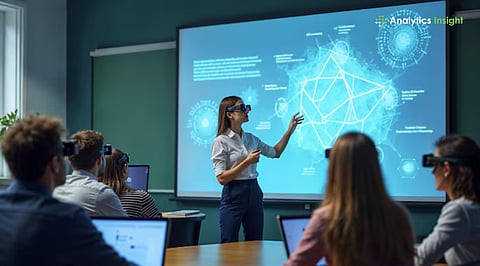
TLDR: AI is transforming education through personalized AI tutors and virtual teaching assistants, enhancing learning experiences by catering to individual student needs. While these technologies improve engagement and efficiency, they also raise concerns about data privacy and bias. Balancing AI integration with ethical considerations is essential for future educational success.
In today's fast-evolving educational landscape, Artificial Intelligence (AI) is making significant inroads, particularly through the development of AI tutors and virtual teaching assistants. These innovative technologies are reshaping the way students learn and educators teach, providing personalized support that enhances the educational experience.
AI tutors are designed to offer individualized learning experiences by adapting to students' needs and learning paces. Unlike traditional classroom settings where a teacher's attention is divided among many students, AI tutors can concentrate on one learner at a time, identifying their strengths and weaknesses. This tailored approach allows for a deeper understanding of concepts, ensuring that students can grasp difficult subjects without feeling overwhelmed.
Moreover, AI tutors leverage vast amounts of data to refine their teaching methods continuously. They analyze student performance, adjusting their strategies to optimize learning outcomes. This level of customization is particularly beneficial for students who may struggle with conventional teaching methods, as it allows them to progress at their own speed while receiving immediate feedback.
On the other hand, virtual teaching assistants complement the role of human educators by handling administrative tasks, grading assignments, and answering common student queries. This support enables teachers to focus on more critical aspects of education, such as engaging with students and developing lesson plans. Virtual assistants are often accessible 24/7, providing students with the opportunity to seek help outside of regular class hours, thus enhancing their learning experience.
While the integration of AI in education offers numerous advantages, it also raises some concerns. Issues related to data privacy, the potential for biased algorithms, and the need for human oversight are paramount in discussions about the role of AI in the classroom. Educators and institutions must navigate these challenges carefully to maximize the benefits of AI while ensuring ethical standards are maintained.
As we move forward, the collaboration between AI technologies and traditional teaching methods is likely to become more pronounced. By embracing AI tutors and virtual teaching assistants, educational institutions can create more engaging and effective learning environments that cater to the diverse needs of students. The future of education may very well hinge on the successful integration of these advanced tools, fostering a generation of learners who are equipped for the complexities of the modern world.
Please consider supporting this site, it would mean a lot to us!
