



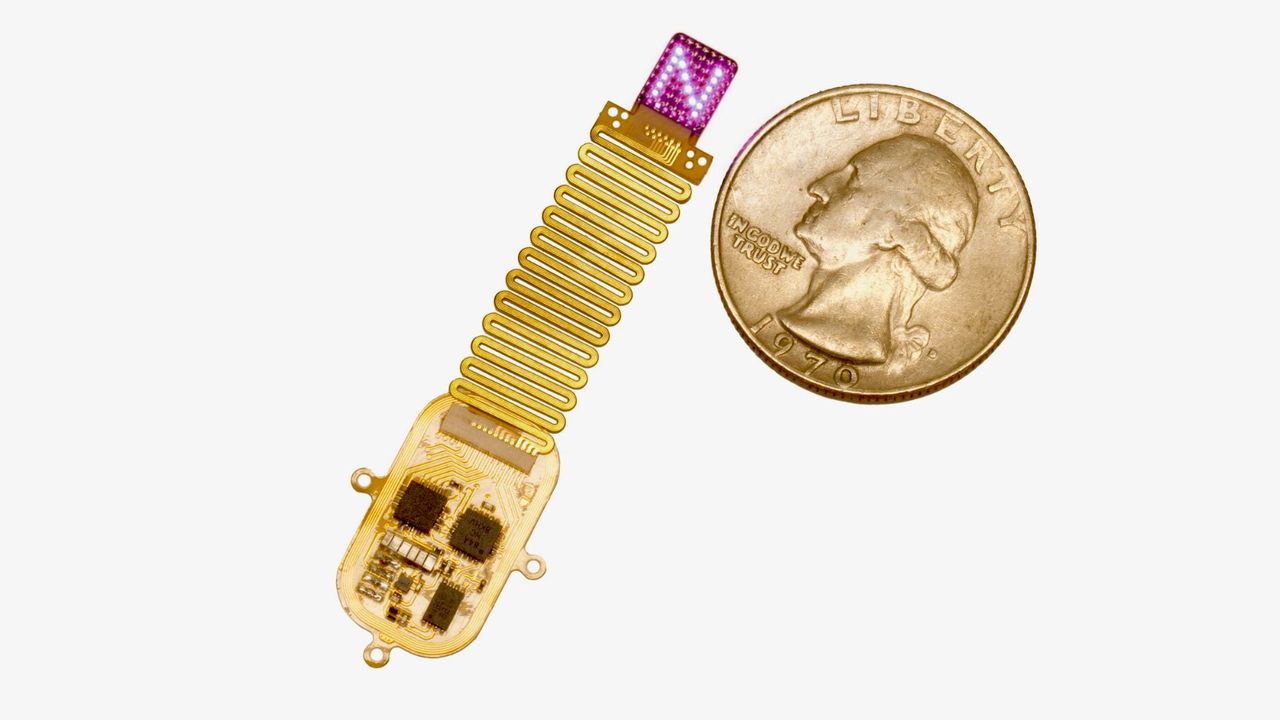
TLDR: Researchers have developed a light-activated implant for the brain that communicates with neural circuits, offering minimally invasive treatment options for neurological disorders like epilepsy and depression. This technology enhances understanding of brain functions and enables personalized medicine, promising improved patient outcomes in brain health.
Researchers have recently developed a groundbreaking neuroscience device that may revolutionize the way we interact with the brain. This tiny device, which can be placed under the scalp, utilizes light to communicate with neural circuits, offering exciting possibilities for the treatment of various neurological conditions.
The device, known as a light-activated implant, has the potential to enhance our understanding of brain functions and disorders. By using optogenetics, the researchers can precisely control the activity of neurons with light pulses. This technology allows for the modulation of brain activity, which could lead to new therapies for conditions such as epilepsy, depression, and even neurodegenerative diseases.
One of the most significant advantages of this device is its minimally invasive nature. Unlike traditional methods that may require extensive surgery, this implant can be inserted through a small incision, reducing recovery time and risks associated with surgery. Furthermore, the ability to use light to stimulate the brain opens a new frontier in the field of brain health, enabling targeted treatments that could lead to more effective interventions.
The researchers are optimistic about the future of this technology, as it not only provides insights into brain activity but also holds the promise of personalized medicine. By tailoring treatments to individual brain patterns, the potential for improved outcomes in patients with various neurological disorders is significant.
As this innovative device moves forward in development, it represents a hopeful step towards understanding the complexities of the human brain and developing effective treatments for debilitating conditions. The intersection of light and neuroscience could pave the way for advanced therapies that enhance the quality of life for many individuals. This research exemplifies a remarkable advancement in the realm of medical technology and underscores the importance of continued exploration in the field.
Please consider supporting this site, it would mean a lot to us!
