



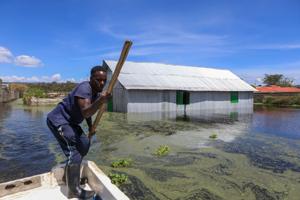
TLDR: Kenya faces rising lake levels due to climate change and human activity, leading to community displacement and economic risks. Increased rainfall and poor land management exacerbate flooding, prompting calls for sustainable practices and infrastructure improvements to protect affected populations and natural resources.
In recent years, Kenya has been grappling with a pressing environmental issue: the rising water levels of its lakes. A combination of climatic changes and human activity has led to unpredictable fluctuations in lake sizes, which has significant implications for local communities. As thousands of people confront this uncertain future, scientists are delving into the data to understand the underlying causes of this phenomenon.
The lakes in Kenya, notably Lake Victoria, Lake Naivasha, and others, have seen dramatic increases in their water levels. This rise is attributed primarily to heavy rainfall during recent wet seasons, compounded by climate change effects that lead to more intense and irregular weather patterns. As a result, areas that were once habitable are now submerged, displacing communities and threatening their livelihoods.
Research indicates that the long-term climatic shifts have resulted in increased rainfall in the region. However, the situation is further complicated by human factors, such as deforestation and land use changes, which have diminished the land's ability to absorb rainfall effectively. This has led to runoff that exacerbates the flooding of these lakes.
The implications of the rising lake levels are profound. Many residents depend on the land for agriculture and fishing, both of which are now at risk due to the encroaching waters. The displacement of families and disruption of local economies are immediate concerns, prompting urgent calls for action from both governmental and non-governmental organizations.
Local authorities are being urged to implement sustainable practices and invest in infrastructure that can mitigate the impacts of rising waters. This includes better flood management systems, reforestation efforts, and community education programs aimed at enhancing resilience against climatic changes.
As scientists continue to monitor the situation and further analyze data, it is clear that the future of Kenya's lakes and the communities surrounding them hangs in the balance. Addressing the challenges posed by rising water levels will require concerted efforts from all stakeholders to ensure the well-being of the affected populations and the preservation of the region's natural resources.
Please consider supporting this site, it would mean a lot to us!
