



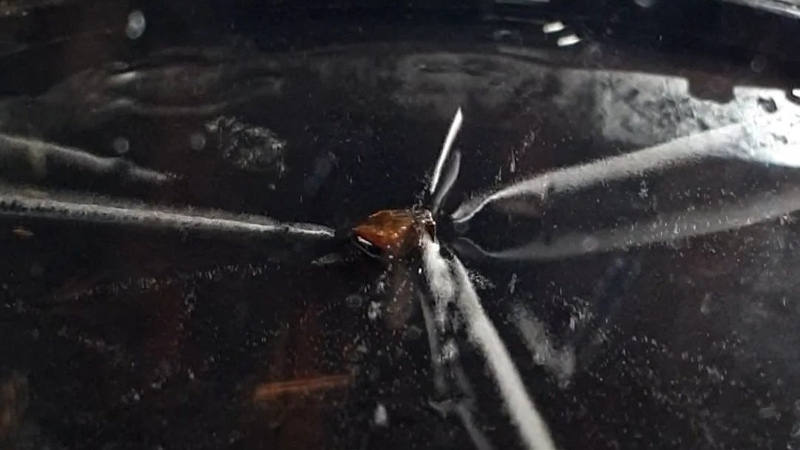
TLDR: Recent advancements in cloud chamber technology enhance its functionality for observing charged particles. Innovations include LED lighting for better visibility, digital cameras for real-time data collection, and portable designs, making the device more accessible for educational and research purposes while fostering public engagement in particle physics.
The cloud chamber has long been a fascinating instrument for observing the trails of charged particles. Though it has been celebrated for its unique ability to visualize the behavior of such particles, recent advancements aim to enhance its functionality and user experience. This article delves into the various improvements being made to this classic device, making it more accessible and effective for both educational and research purposes.
Traditionally, a cloud chamber operates by creating a supersaturated vapor environment that allows charged particles, like electrons or alpha particles, to leave behind a visible path as they interact with the vapor. While this process is captivating, the chamber’s design has typically been limited by factors such as temperature control and the need for a vacuum. Modern innovations are addressing these challenges head-on.
One of the key improvements involves the adoption of LED lighting technology. By utilizing LEDs, enthusiasts can achieve better illumination within the chamber, enhancing visibility of particle tracks. This not only makes it easier for observers to see the trails but also allows for better photographic documentation of the experiments, which is essential for educational purposes.
Another significant advancement is the integration of digital cameras and sensors that provide real-time imaging and data collection. These devices can record the particle interactions in high resolution, enabling more detailed analysis and interpretation. The use of software to analyze the data allows researchers to delve deeper into particle behavior, offering insights that were previously difficult to obtain.
Moreover, the introduction of portable designs is expanding the reach of cloud chambers. Traditional setups can be cumbersome and require specific laboratory conditions. However, with modern materials and design techniques, it's possible to create compact and portable cloud chambers that can be used in various settings, including classrooms and public demonstrations. This portability not only makes the technology more accessible but also encourages wider public engagement with the sciences.
In conclusion, the evolution of the cloud chamber through technological enhancements is paving the way for a new generation of particle physics enthusiasts and researchers. With improvements in lighting, imaging, and portability, this classic instrument is being revitalized, making it an exciting tool for exploring the fundamental aspects of matter. As interest in particle physics continues to grow, the cloud chamber stands as a testament to the ongoing journey of scientific discovery.
Please consider supporting this site, it would mean a lot to us!
