



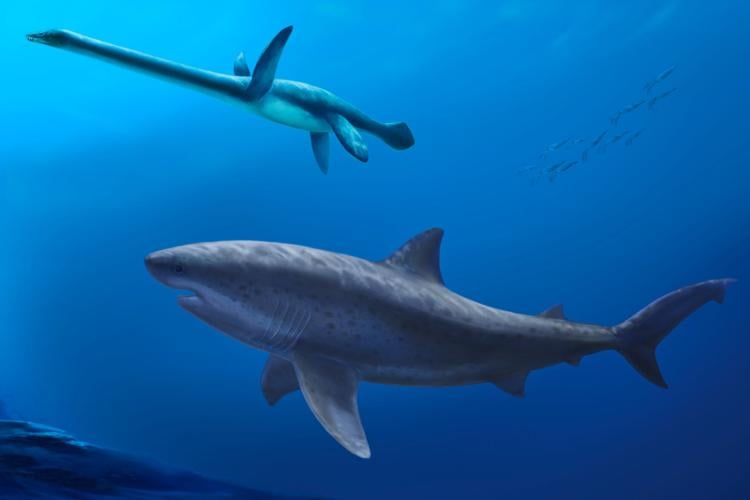
TLDR: Research reveals that before the Megalodon, the Cretoxyrhina, or "ginsu shark," dominated Australia's ancient seas around 100 million years ago. This apex predator, growing up to 20 feet, showcased remarkable hunting abilities, with fossilized teeth suggesting a diverse diet and significant ecological impact.
New research has unveiled that before the infamous Megalodon roamed the oceans, a massive shark known as Cretoxyrhina, or the “ginsu shark,” dominated the ancient seas of Australia. This apex predator, which existed approximately 100 million years ago during the Late Cretaceous period, was remarkable not only for its size but also for its predatory behavior.
Cretoxyrhina could grow up to 20 feet in length, making it one of the largest sharks of its time. Researchers have discovered fossilized teeth in Australia that provide substantial evidence of its existence, indicating that it was a significant predator in the marine ecosystem. The teeth, which have a serrated edge resembling a ginsu knife, highlight its ability to efficiently hunt and consume a variety of prey, including fish and marine reptiles.
This recent study not only emphasizes the importance of Cretoxyrhina in prehistoric marine life but also sheds light on the evolutionary history of sharks. As scientists continue to analyze these ancient fossils, they hope to gain insights into how these formidable creatures adapted to their environment and how they interacted with other marine species.
Additionally, the research draws parallels between Cretoxyrhina and modern sharks, illustrating the evolutionary lineage that has shaped today’s marine ecosystems. Understanding these ancient species can also inform current conservation efforts, as they highlight the resilience and adaptability of sharks over millions of years.
As researchers continue their work, the findings about Cretoxyrhina will undoubtedly add to the growing body of knowledge regarding prehistoric marine life and the complex dynamics of ancient ecosystems. The legacy of these ancient predators serves as a reminder of the diverse and formidable life forms that once ruled the oceans, long before the reign of the Megalodon.
Please consider supporting this site, it would mean a lot to us!
