



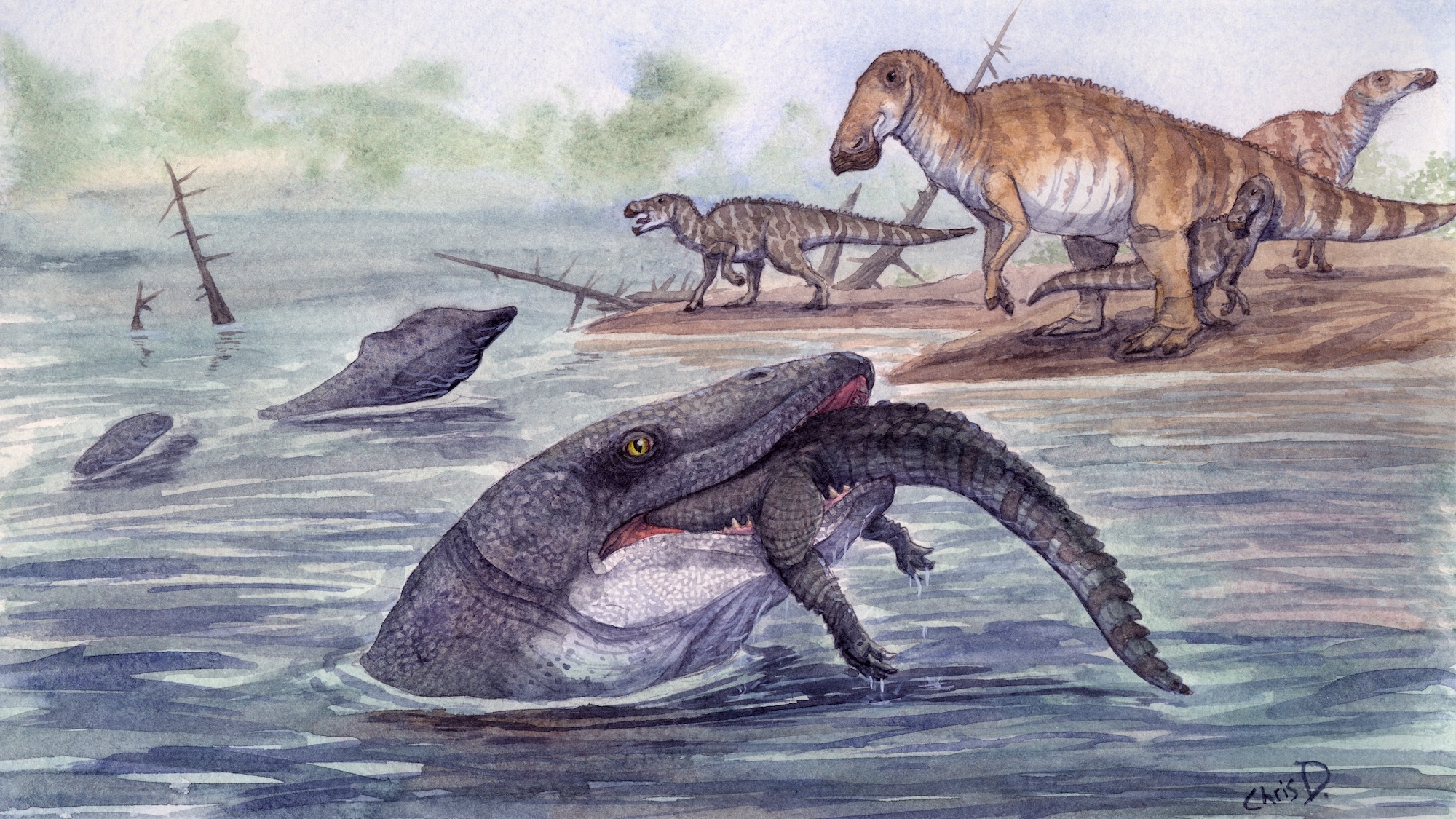
TLDR: A recent mosasaur fossil found in a freshwater environment challenges the belief that these ancient reptiles were exclusively marine. This discovery suggests they may have adapted to diverse habitats, prompting reevaluation of their behavior and life cycle, and highlights the need for further research on their ecological roles.
The discovery of a mosasaur fossil in a freshwater environment has intrigued paleontologists and raised questions about the habitat preferences of these ancient marine reptiles. Traditionally associated with oceanic ecosystems, mosasaurs were apex predators that roamed the seas during the Late Cretaceous period, approximately 70 million years ago. However, this recent finding suggests that they may have occasionally ventured into freshwater systems.
The fossil was unearthed in a region known for its rich fossil record, and its location indicates that mosasaurs could have adapted to different environmental conditions than previously thought. This challenges the long-held belief that mosasaurs were strictly marine creatures. The implications of this discovery could lead to a reevaluation of their behavior, feeding habits, and reproductive strategies.
Researchers have noted that the fossil's preservation state suggests it lived in a river or estuarine environment, which is quite distinct from the open ocean settings typically associated with mosasaurs. This finding adds depth to our understanding of mosasaur habitat diversity and adaptability. Such adaptability might have been crucial for their survival during periods of environmental change.
Additionally, the revelation opens up new avenues for studying the evolutionary history of mosasaurs and their relatives. It raises the possibility that these creatures might have had a more complex life cycle than previously documented, potentially moving between marine and freshwater habitats.
This discovery not only enriches the narrative of mosasaurs but also contributes to the broader understanding of ancient ecosystems. As research continues, more fossils could help paint a clearer picture of how these magnificent reptiles thrived in their time.
In summary, the finding of a freshwater mosasaur fossil is a significant contribution to paleontology, suggesting that these ancient reptiles were more versatile than previously assumed. This could alter our understanding of their ecological roles and adaptations, highlighting the need for further research in this fascinating field.
Please consider supporting this site, it would mean a lot to us!
