



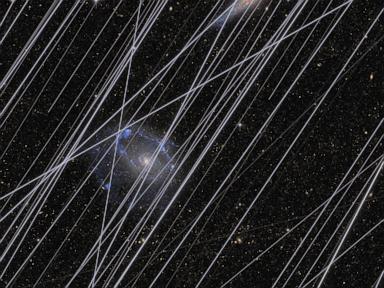
TLDR: The increasing number of satellites poses a significant threat to astronomical observations, particularly affecting NASA's telescopes due to bright reflections that interfere with data collection. A balanced approach is needed to mitigate these challenges while harnessing satellite technology's benefits for both communication and scientific exploration.
In recent years, the surge of satellites launched into orbit has raised significant concerns regarding the impact on astronomical observations. A new study highlights that the increasing number of satellites poses a growing threat to the capabilities of space telescopes, particularly those operated by NASA. The phenomenon is being termed as a 'satellite boom,' which refers to the rapid deployment of satellites for a variety of purposes, including communication, Earth monitoring, and internet services.
The study reveals that the bright reflections from these satellites can interfere with the delicate instruments of telescopes, making it challenging to capture clear images of celestial bodies. This interference can lead to data contamination, obstructing the ability of scientists to conduct precise measurements and analyses of distant stars, planets, and other astronomical phenomena.
Researchers emphasize that while the advancements in satellite technology have significant benefits for global communication and data gathering, the implications for space research are profound. The report stresses the need for a balanced approach that considers both the benefits of satellite technology and the preservation of the night sky for scientific exploration.
Moreover, the study outlines potential solutions to mitigate these issues. Suggestions include designing satellites with less reflective surfaces and implementing stricter regulations on satellite launches. These measures could help protect the integrity of astronomical research and ensure that space remains a frontier for discovery rather than a cluttered environment filled with artificial objects.
As the space exploration landscape continues to evolve, it becomes increasingly vital to address the challenges posed by this satellite boom. The collaboration between satellite operators and the scientific community will be essential in finding a sustainable path forward that fosters both technological innovation and the advancement of our understanding of the universe.
In conclusion, while satellites play a crucial role in modern technology, their impact on space telescopes cannot be overlooked. With thoughtful planning and cooperation, it is possible to harness the benefits of satellite technology while safeguarding the future of astronomical research.
Please consider supporting this site, it would mean a lot to us!
