



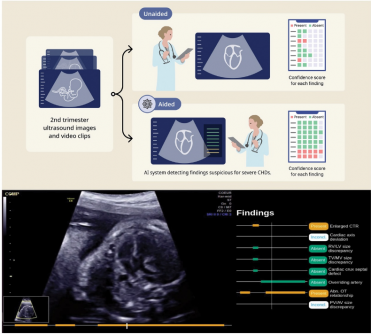
TLDR: Mount Sinai obstetricians are the first in NYC to use an FDA-approved AI tool for screening fetal congenital heart defects. This innovation improves early detection and planning for affected infants, enhancing prenatal care and outcomes for mothers and babies, and setting a precedent for other healthcare institutions.
In a groundbreaking development for maternal and fetal health, obstetricians at Mount Sinai have become the first in New York City to implement a newly approved FDA tool that leverages artificial intelligence to enhance screenings for congenital heart defects in fetuses. This innovation marks a significant advancement in prenatal care, enabling healthcare providers to identify potential heart issues earlier and more accurately than traditional methods allow.
The AI tool, designed specifically for use in obstetrics, analyzes ultrasound images to assist clinicians in detecting congenital heart defects, which are among the most common types of birth defects affecting newborns. Early detection is crucial as it allows for timely interventions and better planning for the delivery and care of affected infants post-birth.
Mount Sinai's initiative is a part of a broader effort to integrate cutting-edge technologies into standard medical practice, ensuring that patients receive the best possible care. The obstetricians at Mount Sinai are excited about the potential of this AI-driven tool to improve outcomes for mothers and their babies.
This advancement not only showcases the hospital's commitment to innovation but also sets a precedent for other healthcare institutions in the region to follow suit. By adopting such technologies, healthcare providers can enhance diagnostic accuracy and reduce the time it takes to make critical decisions regarding prenatal care.
As the healthcare landscape continues to evolve with the advent of new technologies, the adoption of AI in obstetrics may pave the way for further advancements in maternal-fetal medicine. This initiative at Mount Sinai is a promising step towards a future where advanced technology plays a central role in ensuring the health and well-being of both mothers and their children.
Please consider supporting this site, it would mean a lot to us!
