



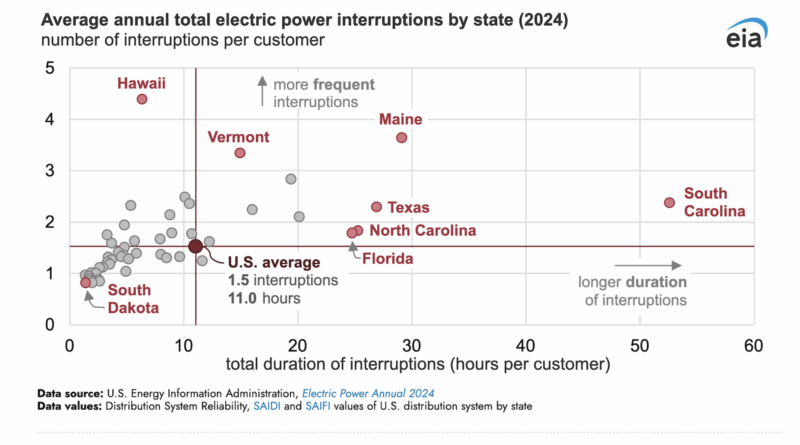
TLDR: In 2024, the U.S. faced severe hurricanes causing unprecedented power outages and highlighting vulnerabilities in the electrical grid due to climate change. The storms prompted urgent calls for infrastructure upgrades and improved disaster preparedness to enhance resilience against future extreme weather events.
In 2024, the United States experienced a series of devastating hurricanes that resulted in the highest number of hours without power in a decade. These extreme weather events highlighted the vulnerabilities in the country’s electrical grid, raising concerns about the impacts of climate change on infrastructure resilience. The storms, fueled by warmer ocean temperatures, not only disrupted daily life for millions but also underscored the urgent need for improvements in disaster preparedness and response systems.
The hurricanes of 2024 were notable for their intensity and frequency, with several storms making landfall in quick succession. The aftermath saw extensive damage to power lines and substations, leaving communities across the Southeast and Gulf Coast without electricity for extended periods. This situation was further exacerbated by the challenges of restoring power amidst ongoing severe weather conditions.
Utility companies faced immense pressure to respond quickly, but many were hindered by the scale of the destruction. The total hours of outages surpassed previous years, signaling a troubling trend that could become more common as climate-related events increase. The data revealed that some regions experienced outages lasting days, and in some cases, even weeks, prompting local governments to declare states of emergency.
This unprecedented situation has sparked discussions about enhancing the resilience of the power grid. Experts argue that investing in infrastructure upgrades, such as underground power lines and advanced grid technologies, is essential to mitigate the effects of future storms. Moreover, the integration of renewable energy sources can play a significant role in creating a more robust and sustainable energy system.
As communities rebuild and recover from these disasters, policymakers and utility companies must prioritize long-term strategies to address the growing threat posed by climate change. The events of 2024 serve as a stark reminder of the importance of preparedness and the need for comprehensive solutions to ensure that America’s power grid can withstand the challenges of the future.
In conclusion, the hurricanes of 2024 not only caused significant disruption and hardship but also highlighted critical areas for improvement in energy infrastructure. The lessons learned from this year's storms will shape the future of disaster response and energy resilience in the United States.
Please consider supporting this site, it would mean a lot to us!
