



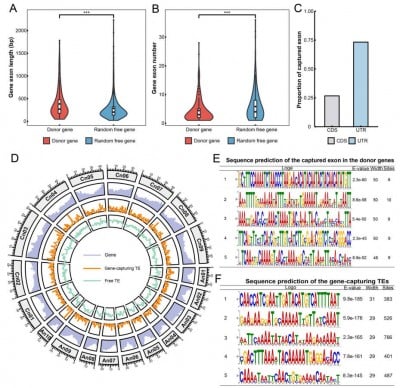
TLDR: Recent research reveals that transposons, or "jumping genes," play a crucial role in the evolution of rapeseed by enhancing genetic diversity and adaptability through epigenetic regulation. This understanding could lead to improved crop resilience and productivity, addressing global food security challenges amid climate change.
Recent research has delved into the fascinating world of transposons, often referred to as "jumping genes," and their pivotal role in the evolution of rapeseed (Brassica napus). These mobile genetic elements can relocate within the genome, leading to significant genetic diversity and adaptability in plants. The study highlights how transposons can influence not only the genetic makeup but also the epigenetic landscape of organisms, showcasing their importance in evolutionary biology.
Transposons are known to affect gene expression through various epigenetic mechanisms, which can regulate how genes are turned on or off without altering the underlying DNA sequence. This phenomenon is particularly crucial in plants, where environmental pressures can drive rapid adaptations. The research indicates that transposons can serve as epigenetic regulators, thereby facilitating the evolutionary responses of rapeseed to changing conditions.
The findings suggest that the interaction between transposons and the plant's epigenetic machinery allows for a layer of regulation that can lead to phenotypic changes. These changes can be beneficial, enabling the plant to survive and thrive in diverse environments. For instance, during stress conditions such as drought or salinity, certain transposons may activate genes that enhance resilience, demonstrating a remarkable example of adaptive evolution.
Furthermore, the study emphasizes the potential applications of understanding transposon behavior in crop improvement. By harnessing these natural genetic elements, researchers can develop strategies to enhance crop resilience and productivity. This knowledge could be invaluable for addressing global food security challenges, particularly in the face of climate change.
In summary, the interplay between transposons and epigenetic control mechanisms is a key driver of evolution in rapeseed. This research not only sheds light on fundamental biological processes but also opens new avenues for agricultural innovation. As scientists continue to unravel the complexities of genetic regulation, the future of crop breeding and enhancement looks promising, paving the way for more sustainable agricultural practices.
Please consider supporting this site, it would mean a lot to us!
