



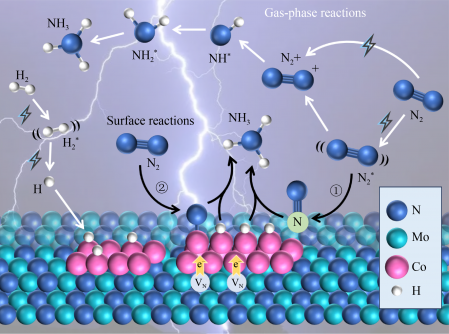
TLDR: Recent advancements in ammonia synthesis using a co-doping method with molybdenum nitride (Mo2N) as a co-catalyst enhance efficiency and yield in plasma catalytic processes. This approach supports sustainable production, reducing reliance on fossil fuels and aligning with energy transition goals.
Recent advancements in ammonia synthesis have taken a significant leap forward with a novel method called co-doping. This innovative approach enhances plasma catalytic processes, specifically utilizing molybdenum nitride (Mo2N) as a co-catalyst. Ammonia, a crucial component in fertilizers and various industrial applications, is traditionally produced through the Haber-Bosch process, which is energy-intensive and relies heavily on fossil fuels. Therefore, the exploration of alternative synthesis methods is vital for sustainable production.
The study reveals that the co-doping technique involves the introduction of a secondary dopant alongside the primary Mo2N catalyst. This dual-doping strategy significantly improves the efficiency of ammonia production under plasma conditions. By optimizing the electronic properties of the catalyst, researchers have found that this method can enhance the reaction rates and yield of ammonia. Such improvements could potentially lead to more sustainable and efficient production methods, aligning with global energy transition goals.
In addition to enhancing catalyst performance, the plasma catalytic process allows for the use of renewable energy sources, further reducing the carbon footprint associated with ammonia synthesis. This fusion of advanced materials science and sustainable energy practices represents a promising direction for future research and industrial applications.
The researchers also explored the mechanistic aspects of the co-doping process, shedding light on how different dopants interact with the Mo2N catalyst. This understanding is crucial for designing more effective catalysts that can operate under diverse conditions and improve ammonia yield. The implications of this research extend beyond ammonia synthesis, offering insights into broader applications of catalytic processes in energy conversion and chemical production.
Overall, the implementation of co-doping in plasma catalytic ammonia synthesis marks a significant step toward achieving more sustainable industrial practices. As researchers continue to explore and refine this technology, the potential for reducing reliance on traditional fossil fuel-based methods becomes increasingly viable, paving the way for a greener future.
Please consider supporting this site, it would mean a lot to us!
