



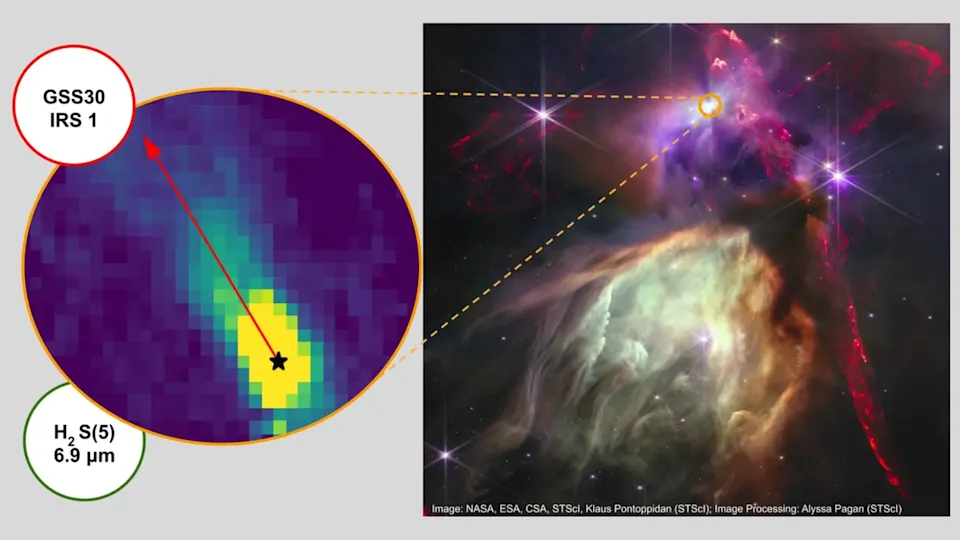
TLDR: The James Webb Space Telescope has captured detailed images of the distant galaxy GLASS-z13, located 13.5 billion light-years away, revealing insights into early galaxy formation. This discovery challenges existing theories and highlights the galaxy's rapid star formation, enhancing our understanding of the universe's evolution.
The James Webb Space Telescope (JWST) has made a groundbreaking discovery by capturing the most detailed images of a distant galaxy, shedding light on the early universe's formation and evolution. This remarkable achievement not only showcases the telescope's advanced capabilities but also offers valuable insights into how galaxies like our own Milky Way came into existence.
Located approximately 13.5 billion light-years away, the galaxy in question is known as GLASS-z13. It has been observed as it was just 300 million years after the Big Bang, providing astronomers with a unique opportunity to study its structure and composition. The data collected by JWST suggests that GLASS-z13 is a rapidly forming galaxy, which challenges existing theories about galaxy formation in the early universe.
One of the most striking features of this galaxy is its size and brightness. Researchers believe that such characteristics indicate a higher star formation rate than previously thought possible during this period. This discovery prompts scientists to reevaluate their understanding of how galaxies evolve and grow in the early stages of the universe.
The images captured by JWST have also allowed scientists to analyze the light emitted from GLASS-z13, revealing crucial information about its chemical composition. The presence of various elements such as hydrogen, helium, and traces of heavier elements suggests that the galaxy has already undergone significant stellar activity, which is essential for understanding the lifecycle of galaxies.
The success of the James Webb Space Telescope emphasizes the importance of continued investment in space exploration and technology. As researchers delve deeper into the cosmos, JWST will undoubtedly play a pivotal role in helping us unlock the mysteries of our universe.
Overall, the findings from the James Webb Space Telescope mark a significant milestone in astronomy and our quest to understand the vastness of space. As we continue to explore the cosmos, the insights gained from this advanced instrument will undoubtedly reshape our understanding of the universe's history.
Please consider supporting this site, it would mean a lot to us!
