



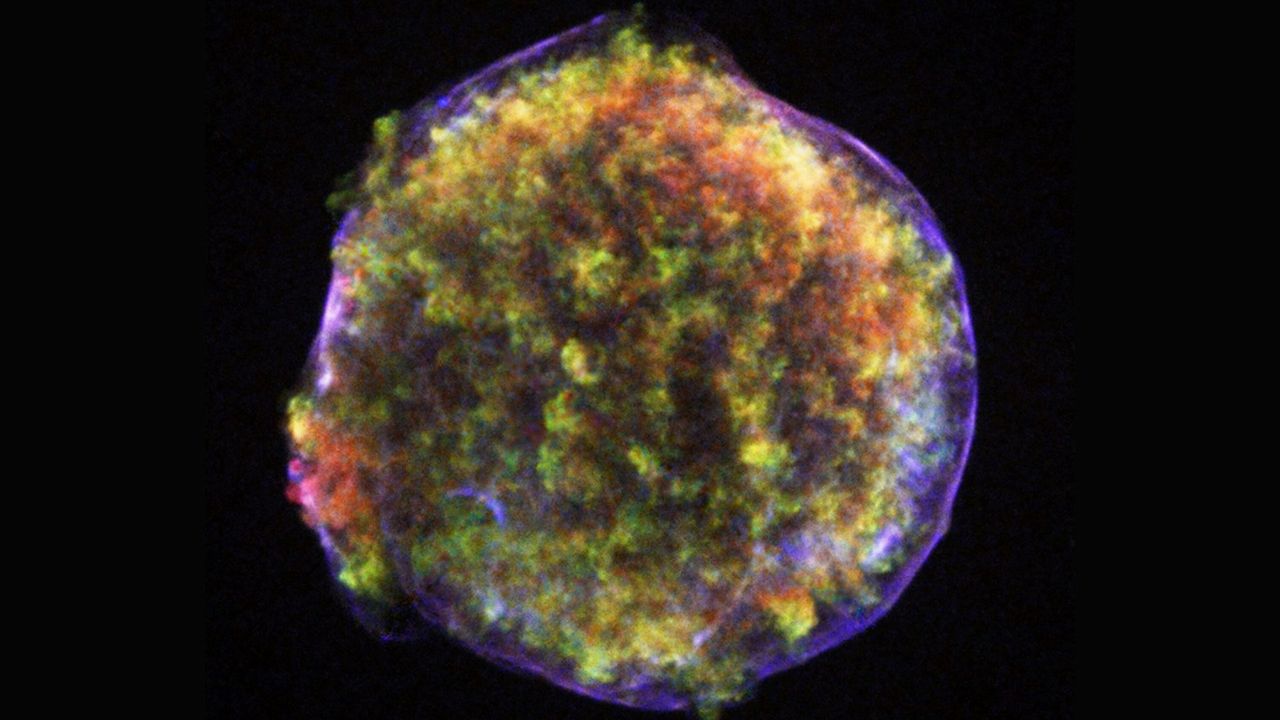
TLDR: The universe's fate is debated through various theories: the Big Freeze suggests endless expansion leading to a cold, dark state; the Big Crunch envisions a collapse due to gravity; the Heat Death aligns with the Big Freeze, resulting in thermodynamic equilibrium; while the Big Rip predicts a dramatic disintegration of matter.
The ultimate fate of the universe has long been a topic of fascination and inquiry among scientists and astronomers. Various theories have emerged over the years, attempting to predict how this vast cosmos may ultimately conclude. The two most widely discussed scenarios are the Big Freeze and the Big Crunch, each presenting a distinct vision of cosmic demise.
The Big Freeze posits that the universe will continue to expand indefinitely. As galaxies move away from each other, stars will exhaust their nuclear fuel, leading to a dark and cold universe devoid of significant energy sources. Over eons, even the remnants of stars will fade, and the universe will drift towards a state of maximum entropy, where all matter is evenly distributed and temperatures approach absolute zero. This scenario emphasizes a gradual, rather than cataclysmic, end.
In contrast, the Big Crunch theory suggests a reversal of the universe's expansion. If the density of matter is sufficient, gravity could eventually halt expansion and pull everything back together. This could lead to a dramatic collapse, culminating in a singularity. However, current observations indicate that the universe's expansion is accelerating, making this scenario less likely.
Another intriguing possibility is the Heat Death, which aligns closely with the Big Freeze. It suggests that as energy becomes uniformly distributed, the universe will reach a state of thermodynamic equilibrium. This would result in a lifeless expanse where no thermodynamic processes can occur, marking an end to all activity and structure.
Meanwhile, the Big Rip scenario presents a more dramatic conclusion where the universe's accelerated expansion eventually tears apart galaxies, stars, planets, and even atomic structures. This would lead to a catastrophic disintegration of all matter as dark energy drives the expansion to an extreme limit.
The quest to understand the universe's end not only provides insights into cosmic evolution but also raises profound questions about existence and our place within it. As technology and observational methods advance, scientists continue to refine their models, offering a deeper comprehension of these potential futures.
Please consider supporting this site, it would mean a lot to us!
