



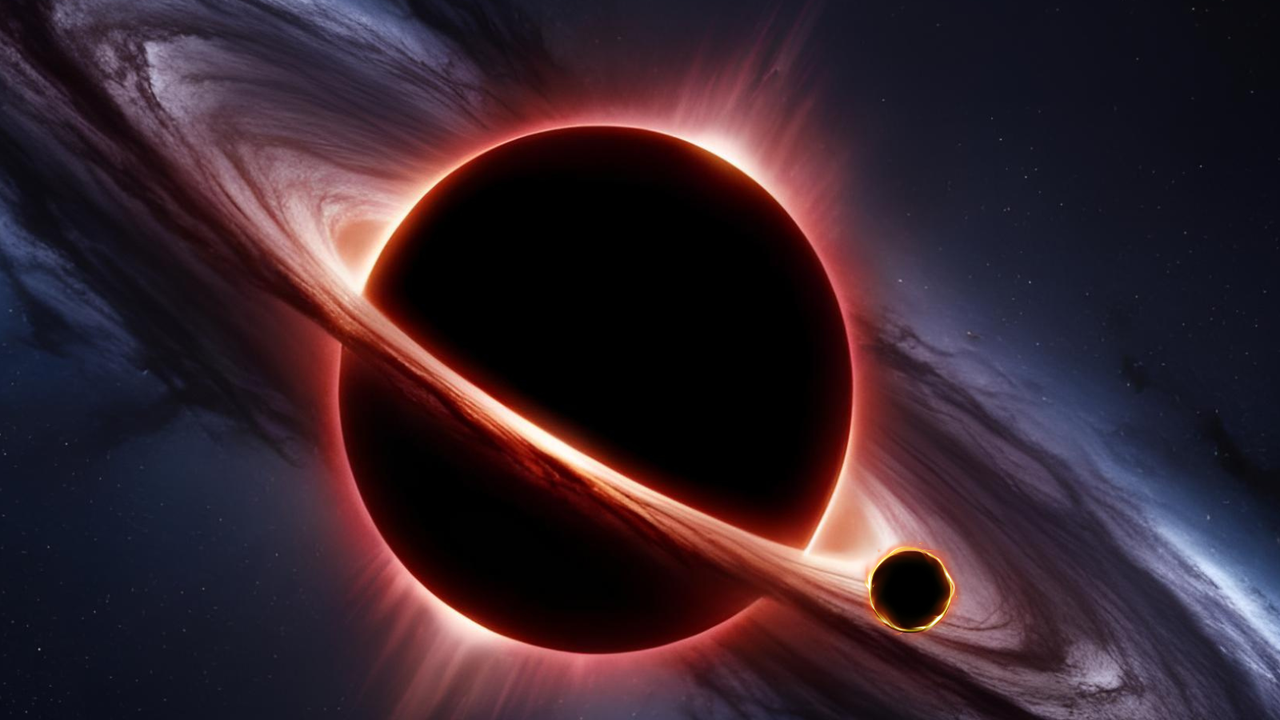
TLDR: Recent research links gravitational waves to primordial black holes formed shortly after the Big Bang, suggesting they could provide insights into cosmic evolution and dark matter. This connection highlights a potential breakthrough in understanding the universe's mysteries as scientists analyze gravitational wave data.
Recent discoveries in the field of gravitational waves have sparked intrigue among astrophysicists regarding the existence of primordial black holes. These black holes are theorized to have formed in the early universe, shortly after the Big Bang, under conditions vastly different from those of black holes formed from collapsing stars. Researchers suggest that these ancient cosmic entities could shed light on some of the universe's most profound mysteries.
Primordial black holes are proposed to have emerged from density fluctuations in the universe's nascent stages, potentially leading to a range of masses. Some could be relatively small, while others might rival the mass of stars. The recent detection of gravitational waves, particularly those originating from the collision of black holes, has provided new avenues for exploring the characteristics of these primordial formations.
One significant study highlighted the potential link between gravitational wave events and primordial black holes. The findings suggest that certain gravitational wave signals could be attributed to the mergers of these ancient black holes, providing the first concrete hints at their existence. This revelation could redefine our understanding of cosmic evolution and the formation of structures in the universe.
The implications of such discoveries extend beyond just black hole physics. They may also offer insights into the nature of dark matter, as primordial black holes could constitute a fraction of this mysterious substance that makes up a substantial portion of the universe's mass. Exploring their properties could help unravel the complexities surrounding dark matter, potentially leading to breakthroughs in cosmology.
As researchers continue to analyze data from gravitational wave observatories, the quest for primordial black holes remains a tantalizing challenge. Each detection of gravitational waves serves as a reminder of the universe's dynamic nature and the secrets it still holds. The possibility that these ancient black holes might not only exist but could also influence the cosmos in ways we are just beginning to understand is a thrilling prospect for astrophysics.
In summary, the connection between gravitational waves and primordial black holes opens new doors in our exploration of the universe. The ongoing research in this area is crucial for enhancing our grasp of both the origins of black holes and the fundamental workings of the universe itself.
Please consider supporting this site, it would mean a lot to us!
